Retailers Boost Daily Deals 15% in Q2 2025: What It Means for Shoppers

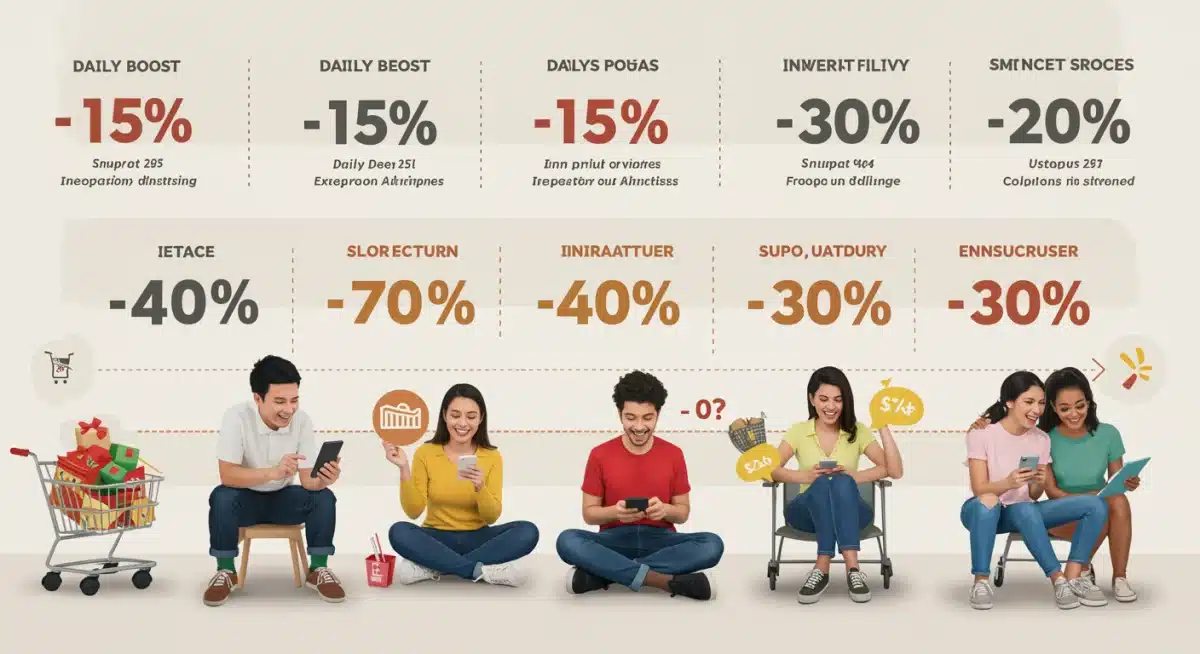
Major retailers are strategically expanding their daily deal inventories by a significant 15% in Q2 2025, reflecting a proactive response to evolving consumer demand and market dynamics.
Get ready to save! Recent updates reveal that
major retailers boosting daily deal inventories by 15% in Q2 2025,
a strategic move poised to reshape the retail landscape and offer unprecedented opportunities for savvy shoppers.
This significant expansion promises a surge in discounted products, making it an exciting time for consumers looking for value.
Understanding the Q2 2025 Daily Deal Surge
The upcoming second quarter of 2025 is set to witness a substantial shift in retail strategies,
with major players committing to a 15% increase in their daily deal inventories.
This isn’t just a minor adjustment; it represents a significant investment in attracting and retaining customers
through aggressive pricing and promotional activities.
The decision stems from a combination of market analysis, competitive pressures, and evolving consumer behavior that prioritizes value.
Retailers are increasingly recognizing the power of daily deals to drive immediate sales,
clear excess inventory, and introduce new products to a wider audience.
The 15% boost is a clear indicator that these promotions are no longer just supplementary tactics
but are becoming a core component of their sales and marketing frameworks.
Factors Driving the Inventory Expansion
Several key factors are influencing this strategic move by major retailers. Firstly,
the heightened competition in the e-commerce space necessitates continuous innovation in customer acquisition.
Secondly, advances in data analytics allow retailers to pinpoint optimal pricing and timing for deals,
maximizing their impact. Lastly, consumer expectations for consistent value and discount opportunities
have grown, pushing retailers to adapt.
- Increased Competition: The crowded online marketplace demands more aggressive promotional strategies.
- Data-Driven Decisions: Analytics provide insights into consumer preferences and deal effectiveness.
- Evolving Consumer Expectations: Shoppers now anticipate regular access to significant discounts.
- Inventory Management: Deals help in efficiently moving seasonal or overstocked items.
In essence, the Q2 2025 daily deal surge is a multifaceted response to the dynamic retail environment.
It reflects a proactive stance from retailers to leverage promotional pricing as a primary tool
for market engagement and sales growth, ultimately benefiting consumers with more choices and savings.
Impact on Consumer Spending and Behavior
The projected 15% increase in daily deal inventories is expected to have a profound impact on consumer spending habits and overall shopping behavior.
With a greater availability of discounted items, consumers are likely to become more price-sensitive and deal-driven,
potentially shifting their purchasing decisions to align with promotional cycles.
This could lead to a more strategic approach to shopping, where consumers actively seek out and wait for deals before making purchases.
The expanded access to deals could also stimulate impulse buying, as attractive offers create a sense of urgency and perceived value.
Moreover, consumers might explore new brands or product categories they wouldn’t typically consider at full price,
broadening their purchasing horizons and diversifying their shopping baskets.
Shifting Consumer Priorities
As daily deals become more prevalent, consumers’ priorities are likely to shift even further towards value and affordability.
This means retailers will need to maintain competitive pricing not just during promotional periods,
but also consider the long-term impact on brand perception.
The abundance of deals might also lead to a higher expectation for discounts,
making it challenging for retailers to sell at full price in the future.
- Increased Deal-Seeking: Consumers will actively hunt for the best prices.
- Impulse Purchases: Time-sensitive deals encourage quick buying decisions.
- Brand Exploration: Discounts reduce the risk of trying new products or brands.
- Value Perception: Continuous deals reinforce the idea of getting more for less.
Ultimately, this surge in daily deals empowers consumers with more choices and greater purchasing power.
It encourages a more informed and strategic shopping approach, pushing retailers to constantly innovate
their pricing and promotional strategies to meet evolving consumer demands.
Strategic Benefits for Major Retailers
For major retailers, the decision to boost daily deal inventories by 15% in Q2 2025 is not merely about offering discounts;
it’s a sophisticated strategic play designed to yield multiple benefits across their operations.
This aggressive approach can significantly enhance market share, improve brand loyalty,
and provide critical data insights into consumer preferences.
By consistently offering compelling daily deals, retailers can create a sense of urgency and excitement,
driving higher traffic to their online and physical stores. This increased footfall and web traffic
translates directly into higher sales volumes, even if individual margins on discounted items are slightly lower.
The overall revenue uplift and customer acquisition potential make it a worthwhile endeavor.
Enhancing Competitive Advantage
In a fiercely competitive market, daily deals serve as a powerful differentiator.
Retailers that can consistently provide attractive discounts are better positioned to stand out from rivals.
This strategy also acts as a defense mechanism against new market entrants and smaller, agile competitors,
solidifying their position as go-to destinations for value.
- Market Share Growth: Attracting new customers and capturing a larger portion of consumer spending.
- Customer Loyalty: Regular deals foster a sense of appreciation and encourage repeat business.
- Inventory Optimization: Efficiently moving slow-selling or seasonal stock to make room for new arrivals.
- Brand Visibility: Deals generate buzz and media attention, increasing brand awareness.
The strategic benefits extend beyond immediate sales,
contributing to long-term brand equity and a more resilient market presence.
Retailers are investing in the future by shaping consumer expectations and loyalty through these promotional efforts.
Challenges and Risks for Retailers
While the 15% boost in daily deal inventories offers significant opportunities,
it also presents a unique set of challenges and risks that retailers must carefully navigate.
The balance between attracting customers with deals and maintaining profitability is delicate,
requiring meticulous planning and execution.
One primary concern is the potential for margin erosion.
If deals become too frequent or too deep, they can inadvertently train customers to always expect discounts,
making it difficult to sell products at full price.
This ‘deal fatigue’ can devalue the brand and impact overall financial health.
Navigating the Pitfalls of Perpetual Promotions
Retailers must also contend with operational complexities, such as managing increased inventory turnover,
logistics for rapid fulfillment, and ensuring adequate staffing during peak promotional periods.
The risk of misjudging demand for discounted items can lead to either stockouts,
disappointing customers, or excessive unsold inventory.
- Margin Erosion: Over-reliance on discounts can shrink profit margins.
- Brand Devaluation: Constant sales may diminish the perceived value of products.
- Operational Strain: Increased deal volume can stress supply chains and customer service.
- Customer Expectation Management: Avoiding a scenario where customers only buy on sale.
Mitigating these risks requires sophisticated pricing strategies, robust inventory management systems,
and a clear understanding of customer lifetime value versus immediate sales gains.
Successful retailers will be those who can strategically deploy deals without compromising their core business model.
Technological Advancements Powering Deal Expansion
The ability for major retailers to confidently boost daily deal inventories by 15% in Q2 2025
is largely underpinned by significant advancements in technology.
These innovations provide the tools necessary to manage complex pricing strategies,
optimize inventory, and personalize offers to a vast customer base.
Artificial intelligence (AI) and machine learning (ML) play a crucial role in predicting demand,
identifying optimal pricing points, and segmenting customers for targeted promotions.
These technologies allow retailers to move beyond generic discounts,
offering deals that are highly relevant to individual shoppers,
thereby increasing conversion rates and customer satisfaction.
The Role of Data Analytics and Personalization
Big data analytics enables retailers to process enormous volumes of consumer data,
from browsing history to past purchases, to understand purchasing patterns and preferences.
This insight is invaluable for crafting deals that resonate deeply with specific customer segments.
Personalization engines then deliver these tailored offers through various channels,
such as email, mobile apps, and website banners, at the most opportune moments.
- AI-Driven Pricing: Dynamic pricing algorithms adjust deals in real-time based on demand and competition.
- Predictive Analytics: Forecasting future sales and inventory needs to minimize waste.
- Personalized Marketing: Delivering highly relevant deals to individual customers.
- Automated Fulfillment: Streamlining logistics to handle increased order volumes efficiently.
These technological pillars are transforming how daily deals are conceived,
executed, and managed, allowing retailers to scale their promotional efforts
while maintaining efficiency and maximizing impact.
Preparing for the Q2 2025 Deal Landscape
As Q2 2025 approaches, both consumers and retailers need to prepare for a significantly altered deal landscape.
For shoppers, this means sharpening their deal-hunting skills and staying informed about upcoming promotions.
For retailers, it involves refining strategies and ensuring operational readiness to capitalize on the increased inventory.
Consumers should consider subscribing to newsletters from their favorite stores,
using deal aggregator websites, and setting up price alerts for desired products.
Being proactive will be key to unlocking the full potential of the expanded daily deal offerings.
This period promises more opportunities for substantial savings across a wide range of products.
Retailer Readiness and Consumer Strategy
Retailers, on their part, must conduct thorough audits of their supply chains,
customer service capabilities, and digital infrastructure.
Ensuring a seamless shopping experience, from browsing deals to post-purchase support,
will be paramount for converting increased traffic into loyal customers.
Investing in responsive website design and mobile app optimization will be critical.
- Consumer Action: Subscribe to alerts, compare prices, and plan purchases strategically.
- Retailer Action: Optimize inventory, enhance website performance, and bolster customer support.
- Market Observation: Keep an eye on competitor deals to remain competitive.
- Feedback Loop: Utilize customer feedback to refine future deal strategies.
The Q2 2025 daily deal surge is a landmark event in retail, demanding adaptability and foresight from all participants.
Those who are best prepared will be the ones to reap the most significant rewards,
whether in terms of savings or sales growth.
| Key Aspect | Brief Description |
|---|---|
| Deal Expansion | Major retailers are increasing daily deal inventories by 15% in Q2 2025. |
| Consumer Impact | More savings opportunities, increased price sensitivity, and strategic shopping. |
| Retailer Strategy | Aims to boost market share, customer loyalty, and efficient inventory management. |
| Technological Drivers | AI, ML, and data analytics enable personalized and optimized deal offerings. |
Frequently Asked Questions About Daily Deal Increases
Retailers are increasing daily deal inventories to attract more customers, gain a competitive edge, manage inventory efficiently, and respond to growing consumer demand for value. This strategic move aims to drive sales and enhance market presence.
Consumers will benefit from a wider array of discounted products, offering more opportunities for significant savings across various categories. It encourages more strategic shopping, allowing individuals to acquire desired items at better prices.
Retailers face potential challenges such as margin erosion, brand devaluation if discounts are too frequent, and operational strains on supply chains and customer service. Careful planning is essential to mitigate these risks and maintain profitability.
Technology, particularly AI, machine learning, and big data analytics, is crucial. It enables retailers to predict demand, optimize pricing, personalize deals for individual customers, and streamline logistics, making large-scale promotions feasible and effective.
Consumers can prepare by subscribing to retailer newsletters, utilizing deal aggregator websites, and setting up price alerts for specific products. Being proactive and informed will maximize their ability to capitalize on the increased daily deal offerings.
Conclusion
The announcement that major retailers will be significantly boosting daily deal inventories by 15% in Q2 2025 marks a pivotal moment in the retail sector.
This strategic shift reflects a concerted effort by businesses to adapt to evolving market dynamics, intensifying competition, and the consumer’s persistent demand for value.
For shoppers, this translates into an exciting period of enhanced savings and a broader selection of discounted products.
For retailers, it represents an opportunity to strengthen market position, optimize inventory, and foster customer loyalty,
provided they skillfully navigate the inherent challenges. The coming quarter will undoubtedly be a dynamic time,
underscoring the power of promotions in shaping both consumer behavior and the future of retail.