Is It Worth It? Analyzing the 20% Online Exclusive Discount

Analyzing the 20% average discount on premium online exclusive products in 2025 reveals a complex interplay of perceived value and actual financial benefit, requiring careful consumer evaluation beyond the initial markdown.
In 2025, the allure of online exclusive products, often accompanied by an average 20% average discount on premium online exclusive products in 2025 (FINANCIAL IMPACT), continues to captivate consumers. But beyond the immediate appeal of a reduced price tag, a crucial question emerges: Is it truly worth it? This article delves into the financial implications and strategic value of these exclusive online deals.
Understanding the appeal of online exclusive discounts
Online exclusive discounts have become a cornerstone of digital retail strategies, offering consumers a unique incentive to purchase directly from brands or specific online platforms. These deals often present themselves as limited-time opportunities, fostering a sense of urgency and perceived scarcity that drives consumer action. The psychology behind these offers is complex, tapping into our desire for value and access to special privileges.
The 20% average discount, in particular, strikes a balance between being significant enough to be attractive without devaluing the premium nature of the product. This sweet spot encourages impulse buys while still maintaining a perception of quality. For many, it’s not just about saving money; it’s about feeling smart for finding a better deal than others, a sentiment amplified by the exclusivity factor.
The psychology of scarcity and exclusivity
Retailers leverage psychological triggers to enhance the appeal of online exclusive discounts. Scarcity, whether real or perceived, makes products more desirable. When an item is presented as an ‘online exclusive,’ it immediately suggests limited availability or a special collection not found elsewhere. This exclusivity elevates the product’s status and makes the discount feel more valuable.
- Limited availability: Creates a sense of urgency, prompting quicker purchase decisions.
- Unique access: Makes consumers feel part of an elite group with special privileges.
- Social proof: When others are seen purchasing exclusive items, it reinforces their desirability.
- Fear of missing out (FOMO): Drives consumers to act quickly to avoid losing out on a perceived good deal.
Understanding these psychological tactics is crucial for consumers to make informed decisions, rather than succumbing to the immediate pull of a discounted price. The true worth of a deal extends beyond its percentage off.
The allure of these deals isn’t just about the discount itself, but the entire experience surrounding it. From targeted marketing campaigns to personalized recommendations, online retailers create an environment where these exclusive offers feel tailor-made for the individual, further enhancing their perceived value. Dissecting these layers helps us determine the genuine financial impact.
Evaluating the true financial impact of a 20% discount
While a 20% discount on a premium product might seem like an immediate win, its true financial impact requires a deeper look. It’s essential to consider the original price point, the actual need for the product, and potential hidden costs. A discount on an item you don’t truly need, or one that’s still overpriced even after the reduction, isn’t a saving at all.
Consumers often fall into the trap of perceiving any discount as a good deal, without adequately assessing the intrinsic value of the product or its market price. The ‘premium’ label itself can inflate expectations, making a 20% markdown seem more substantial than it might be in reality. Real savings occur when you purchase a needed item at a genuinely lower price than its fair market value.
Beyond the sticker price: hidden costs and considerations
Several factors can erode the perceived savings of a 20% online exclusive discount.
- Shipping fees: Even with a discount, high shipping costs can negate a significant portion of the savings.
- Return policies: Complex or costly return processes for online exclusives can be a deterrent and an added expense if the product doesn’t meet expectations.
- Warranty limitations: Some exclusive products might have different warranty terms or customer support options compared to standard offerings.
- Opportunity cost: Purchasing a discounted item might mean passing up a better deal on a similar product elsewhere, or tying up funds that could be used more effectively.
A comprehensive financial assessment involves comparing the discounted price against the product’s value, factoring in all associated expenses. This holistic view helps determine if the 20% average discount on premium online exclusive products in 2025 (FINANCIAL IMPACT) genuinely leads to a financial benefit.
Moreover, the perceived ‘premium’ status of a product can sometimes be a marketing tactic to justify higher initial prices. A 20% discount off an artificially inflated price might still leave the consumer paying above what the product is truly worth. Savvy shoppers will research comparable products and their prices across different retailers to ensure they are indeed getting a deal.
The marketing strategies behind premium online exclusives
Retailers employ sophisticated marketing strategies to make premium online exclusive products and their associated discounts irresistible. These tactics go beyond simple price reductions, aiming to build brand loyalty, gather data, and create a strong sense of community around their offerings. Understanding these strategies empowers consumers to shop more critically.
The exclusivity itself is a powerful marketing tool. By making certain products available only through specific online channels, brands can control the narrative, maintain perceived value, and prevent price wars with other retailers. This control allows them to strategically deploy discounts like the 20% average, ensuring profitability while still attracting a dedicated customer base.
Building brand loyalty and data collection
Online exclusives are not just about immediate sales; they are also about long-term customer engagement. Brands use these opportunities to:
- Encourage sign-ups: Often, access to exclusive deals requires newsletter subscriptions or account creation, allowing brands to collect valuable customer data.
- Personalized marketing: Data collected helps tailor future offers, increasing the likelihood of repeat purchases.
- Brand community: Exclusive access can foster a sense of belonging among customers, turning them into brand advocates.
- Feedback loops: Online-only products can serve as testing grounds for new items, gathering direct consumer feedback before a wider launch.
These strategies create a mutually beneficial relationship, where consumers get perceived value and brands gain loyal customers and actionable insights. However, consumers should be aware of the data exchange involved.
The marketing narrative often focuses on the aspirational aspect of premium products. A 20% discount on such an item is framed not just as a saving, but as an opportunity to elevate one’s lifestyle or status at a more accessible price point. This emotional connection can often overshadow a purely rational financial assessment.
Consumer behavior and the perception of value
Consumer behavior is heavily influenced by the perception of value, which isn’t always directly tied to the monetary cost. A 20% discount on a premium online exclusive item can trigger a psychological response that makes the purchase feel more rewarding, even if the actual saving isn’t monumental. This perception of value is a critical component of the ‘is it worth it?’ question.
The cognitive bias known as ‘anchoring’ plays a significant role here. Consumers tend to anchor their perception of value to the original, higher price. Thus, a 20% discount off that anchor price makes the new price seem like a considerable bargain, even if alternatives exist at a lower base price. Understanding these biases is key to becoming a more discerning shopper.
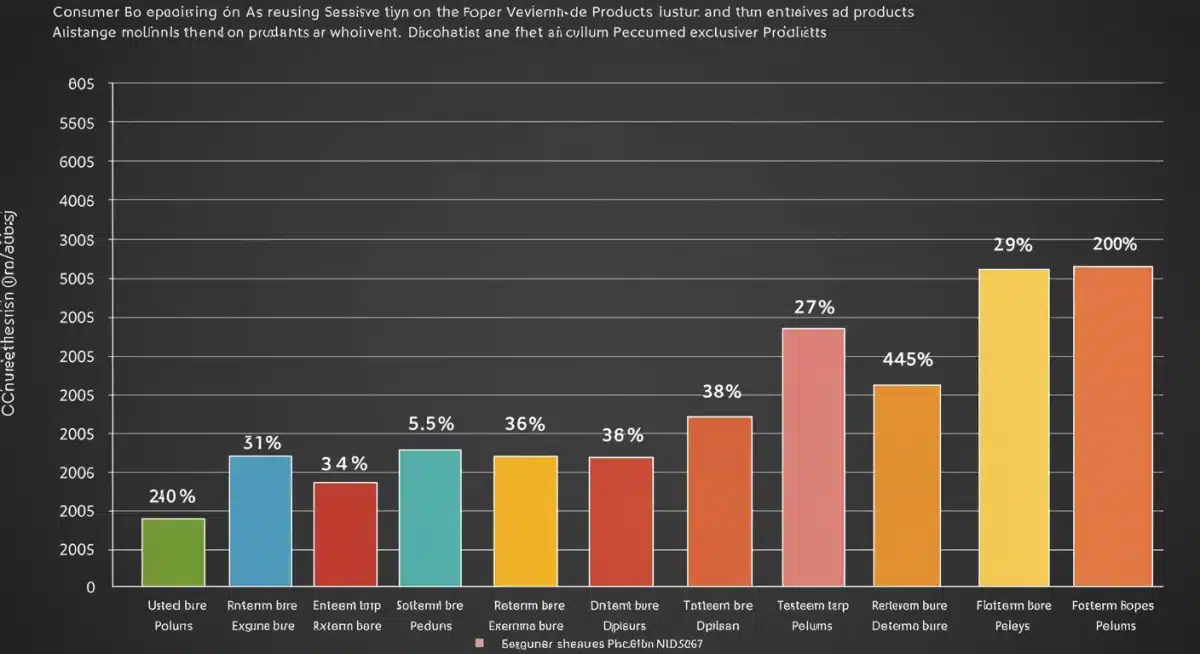

Analyzing the real value behind online exclusive discounts.
Factors influencing perceived value
Several elements contribute to how consumers perceive the value of a discounted premium product:
- Brand reputation: Established premium brands often command higher perceived value, making their discounts seem more significant.
- Product reviews: Positive reviews and testimonials can validate the perceived value of a discounted item.
- Exclusivity: The ‘online exclusive’ label itself adds to the product’s perceived desirability and value.
- Presentation: High-quality product images, compelling descriptions, and a seamless shopping experience enhance the perceived value.
The combination of these factors can make a 20% discount on a premium online exclusive feel like an exceptional opportunity, even when a purely objective financial analysis might suggest otherwise. Consumers must learn to separate genuine value from clever marketing.
Ultimately, the perception of value is subjective. For some, the prestige of owning a premium, exclusive item at a slightly reduced price might be worth more than the pure monetary saving. For others, a practical, budget-conscious approach will always prioritize the absolute lowest price for a comparable quality product. This divergence in priorities shapes the ‘worth it’ decision.
Strategies for maximizing savings on online exclusive deals
To truly benefit from the 20% average discount on premium online exclusive products in 2025 (FINANCIAL IMPACT), consumers need to adopt strategic shopping habits. It’s not enough to simply see a discount; one must evaluate its context and potential for genuine savings. Being a smart shopper means doing your homework before clicking ‘add to cart’.
Effective strategies involve research, patience, and a critical eye. Rather than getting swept up in the excitement of a limited-time offer, take a moment to pause and assess. Is this product something you genuinely need or have been planning to buy? Is the discount truly significant, or just a clever marketing ploy?
Smart shopping techniques for premium products
- Price comparison: Always compare the discounted price with similar products from other brands and retailers, even if the item is an ‘exclusive.’
- Read reviews: Look for independent reviews and testimonials to assess the product’s quality and functionality, not just its brand name.
- Check price history: Use price tracking tools to see if the ‘discounted’ price is genuinely lower than previous selling prices or if it’s a common promotional tactic.
- Factor in total cost: Include shipping, taxes, and potential return costs when calculating the final price.
- Set a budget: Determine what you’re willing to spend beforehand and stick to it, avoiding impulse purchases driven by discounts.
- Wait for bigger sales: Sometimes, waiting for major sales events (e.g., Black Friday, Cyber Monday) might yield even larger discounts on premium items, though exclusivity might be lost.
By implementing these strategies, consumers can turn the 20% average discount into a real financial advantage, ensuring they are getting true value for their money rather than simply falling for a promotional gimmick. Informed decisions lead to smarter purchases.
Moreover, consider the longevity and durability of the premium product. A higher quality item, even with a 20% discount, might offer better long-term value than a cheaper, less durable alternative. This perspective shifts the focus from immediate savings to sustained utility and satisfaction, an important aspect of financial prudence.
The future of online exclusive discounts in 2025
Looking ahead to 2025, the landscape of online exclusive discounts is expected to evolve, driven by technological advancements and changing consumer expectations. Brands will continue to innovate their strategies, making it even more crucial for consumers to stay informed and adaptable in their shopping approaches. Personalization and AI will play increasingly prominent roles.
The integration of artificial intelligence and machine learning will allow retailers to offer highly customized online exclusive deals, potentially moving beyond a flat 20% average discount to dynamic pricing based on individual browsing history and purchasing patterns. This could lead to even more compelling, yet potentially more manipulative, offers.
Emerging trends and consumer implications
- Hyper-personalization: AI-driven recommendations will make discounts feel hyper-relevant, sometimes before consumers even realize they need a product.
- Subscription models: More brands might offer exclusive discounts as a perk for subscription services, bundling products or access.
- Augmented reality (AR) shopping: AR will enhance the online shopping experience, allowing consumers to ‘try on’ or ‘place’ premium products virtually, potentially increasing their perceived value and willingness to pay, even with a discount.
- Sustainability focus: Discounts might be tied to eco-friendly choices or limited-edition sustainable lines, appealing to a growing segment of conscious consumers.
- Gamification: Shopping experiences might incorporate game-like elements, where exclusive discounts are ‘unlocked’ through engagement or loyalty.
These developments suggest that while the 20% average discount on premium online exclusive products in 2025 (FINANCIAL IMPACT) might remain a common benchmark, the methods of delivery and the psychological hooks will become more sophisticated. Consumers will need even greater vigilance to discern genuine value.
Ultimately, the increasing sophistication of online retail demands a more informed and strategic consumer. The future of online exclusive discounts will be characterized by a constant interplay between brand innovation and consumer savviness. Adapting to these changes will be key to truly benefiting from these opportunities without overspending.
| Key Point | Brief Description |
|---|---|
| 20% Discount Allure | The average 20% off on premium online exclusives in 2025 attracts buyers, balancing perceived value and exclusivity. |
| True Financial Impact | Requires assessing original price, genuine need, and hidden costs beyond the discount percentage. |
| Marketing Tactics | Brands use scarcity, loyalty programs, and data to enhance perceived value and drive exclusive sales. |
| Smart Shopping | Strategies like price comparison and budget adherence are crucial to maximize genuine savings. |
Frequently asked questions about online exclusive discounts
An ‘online exclusive’ product means it is only available for purchase through a specific online channel, whether it’s a brand’s website or a particular e-commerce platform. This exclusivity often implies limited availability and is a marketing strategy to drive direct sales and build customer loyalty, creating a sense of special access for shoppers.
Not necessarily. While 20% off seems appealing, its value depends on several factors. Consider the product’s original price, your actual need for it, comparable market prices, and any additional costs like shipping. A discount on an overpriced item or something you don’t need isn’t a true saving.
Retailers benefit by driving direct traffic to their online platforms, collecting valuable customer data, building brand loyalty, and testing new products. Exclusivity allows them to control pricing and distribution, avoiding competition and creating a specialized shopping experience that enhances perceived product value.
To verify a deal’s worth, compare prices across different retailers for similar products, read independent reviews, check the product’s price history using tracking tools, and factor in all associated costs like shipping and potential returns. Also, assess your genuine need and budget for the item before purchasing.
Yes, online exclusive discounts are expected to evolve with technology. Expect more hyper-personalization through AI, increased integration with subscription models, and enhanced shopping experiences via augmented reality. These trends will make offers more targeted, requiring consumers to be even more discerning in their purchasing decisions.
Conclusion
The 20% average discount on premium online exclusive products in 2025 (FINANCIAL IMPACT) presents a compelling proposition for consumers, blending perceived value with the thrill of exclusivity. However, as this analysis reveals, the true financial impact extends beyond the initial markdown. Savvy shopping strategies, a critical assessment of needs, and an understanding of retailer marketing tactics are essential to ensure these deals genuinely translate into savings. As the online retail landscape continues to evolve, staying informed and adopting a discerning approach will be paramount for maximizing value and making truly worthwhile purchases.