Unveiling 4 New Technologies: Boost Online Exclusive Shopping in 2025

The landscape of online exclusive shopping is rapidly evolving, with four key technologies poised to redefine how consumers engage with premium digital retail experiences in 2025, offering unprecedented personalization and security.
In the dynamic world of e-commerce, staying ahead means embracing innovation. As we look towards 2025, the realm of online exclusive shopping is set for a transformative overhaul, driven by groundbreaking advancements. We are on the cusp of
The rise of hyper-personalized AI assistants
The future of online exclusive shopping hinges significantly on the ability to deliver unparalleled personalization. Hyper-personalized AI assistants, far beyond today’s basic chatbots, are emerging as pivotal tools in achieving this. These advanced AI entities are designed to understand individual customer preferences at an intricate level, offering a bespoke shopping journey that mimics the attention found in high-end physical boutiques.
These sophisticated AI systems leverage vast datasets, including past purchase history, browsing behavior, social media interactions, and even biometric data (with user consent), to construct a comprehensive profile of each shopper. This deep understanding allows them to anticipate needs, suggest products with uncanny accuracy, and even adapt their communication style to match the user’s personality.
Predictive analytics for tailored recommendations
One of the core functionalities of these AI assistants is their advanced use of predictive analytics. They don’t just react to current searches; they forecast future desires based on evolving trends and individual patterns.
- Anticipatory suggestions: AI predicts what a customer might want before they even search for it, based on seasonal trends and personal style evolution.
- Contextual relevance: Recommendations are not just product-based but consider the user’s lifestyle, upcoming events, and even mood, creating truly relevant suggestions.
- Dynamic pricing and offers: Personalized discounts and exclusive access can be offered in real-time, tailored to individual engagement and loyalty.
The integration of these AI assistants will transform the browsing experience into a guided exploration, where shoppers feel genuinely understood and valued. This level of personalized attention is crucial for exclusive brands looking to maintain a premium feel in the digital space.
Ultimately, hyper-personalized AI assistants are set to become indispensable concierges in the online exclusive shopping realm. They will not only streamline the purchasing process but also enrich the overall experience, fostering stronger brand loyalty and a sense of belonging among high-value customers. This evolution moves beyond simple algorithms to create a truly intelligent and adaptive shopping companion.
Immersive virtual and augmented reality showrooms
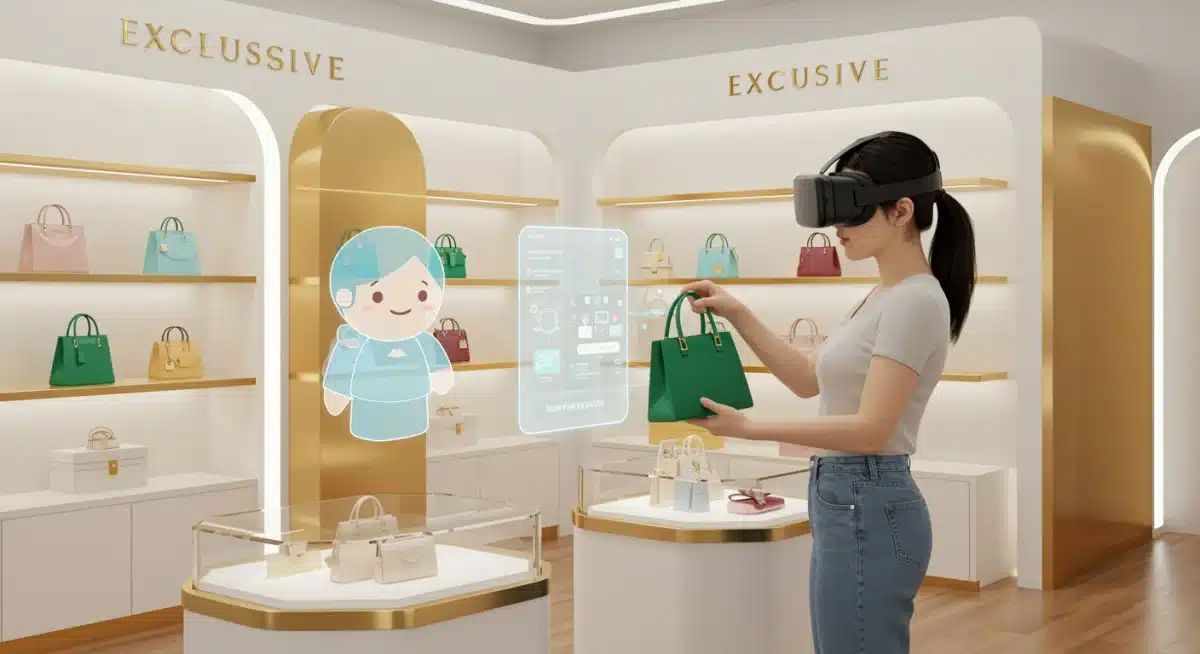
As digital boundaries blur, the physical limitations of traditional retail are being overcome by immersive technologies. Virtual Reality (VR) and Augmented Reality (AR) are poised to revolutionize how consumers interact with exclusive products, offering experiences that transcend flat images and static descriptions. These technologies enable brands to create digital showrooms that are as luxurious and detailed as their real-world counterparts, accessible from anywhere.
Imagine stepping into a high-fashion boutique from your living room, examining a designer handbag from every angle, or virtually trying on a bespoke suit. VR and AR make these scenarios a reality, providing a sense of presence and tangibility previously impossible in online shopping. This is particularly vital for exclusive items where touch, texture, and visual fidelity are paramount.
Enhancing product visualization and interaction
VR and AR go beyond simple product views, allowing for dynamic interaction and detailed examination. Shoppers can manipulate 3D models, customize features, and experience products in their intended environment.
- Virtual try-on: AR apps allow users to virtually try on clothing, jewelry, or makeup, seeing how items look on them in real-time.
- 3D product exploration: VR showrooms enable a full 360-degree inspection of products, highlighting intricate details and craftsmanship.
- Contextual placement: AR can project virtual furniture or art into a user’s home, helping them visualize how it fits before purchase.
These immersive tools reduce purchase hesitation by providing a clearer understanding of the product, minimizing returns, and enhancing customer confidence. For exclusive brands, this means maintaining the allure and prestige of their offerings, even in a digital format.
The development of more accessible and higher-fidelity VR/AR hardware, coupled with advanced 3D rendering, is making these experiences more commonplace. Brands are investing heavily in creating photorealistic digital twins of their products and designing captivating virtual environments. This shift allows exclusive online shopping to move beyond transactional convenience to offer rich, sensory experiences that build a deeper connection with the brand and its products.
Blockchain for authenticity and provenance
In the world of exclusive goods, authenticity is paramount. Counterfeiting poses a significant threat to luxury brands and discerning consumers alike. Blockchain technology offers a robust, immutable solution for verifying the origin and authenticity of high-value items, bringing unprecedented transparency and trust to online exclusive shopping experiences. By creating a digital ledger that records every transaction and ownership transfer, blockchain ensures the integrity of every product’s journey.
This technology provides a secure and verifiable history for each item, from its raw materials and manufacturing process to its final sale and subsequent resales. For premium goods, where provenance and craftsmanship are key selling points, blockchain offers a powerful tool to communicate value and build consumer confidence.
Secure digital identity for products
Each exclusive product can be assigned a unique digital identity on the blockchain, acting as its immutable certificate of authenticity. This identity can be accessed by consumers to verify critical information.
- Immutable records: Details about manufacturing, materials, and origin are permanently recorded and cannot be altered.
- Ownership tracking: A clear chain of ownership is established, preventing fraudulent claims and gray market activities.
- Enhanced resale value: Authenticated products maintain higher resale values, benefiting both original buyers and secondary market participants.
The application of blockchain extends beyond mere authenticity. It can also be used to manage intellectual property, track ethical sourcing, and even facilitate loyalty programs with tokenized rewards. For brands, this translates into enhanced brand protection and a stronger narrative around their commitment to quality and transparency.
Consumers engaging in online exclusive shopping are often willing to pay a premium for guaranteed authenticity and ethical sourcing. Blockchain technology effectively addresses these concerns, providing peace of mind and reinforcing the value proposition of exclusive goods. This foundational layer of trust is essential for fostering long-term relationships between luxury brands and their clientele in the digital age.
Advanced biometric authentication and payment systems
Security and seamlessness are critical components of a premium online shopping experience. Traditional password-based systems and multi-step payment processes can be cumbersome and vulnerable. Advanced biometric authentication and payment systems are set to redefine security and convenience, especially for high-value transactions common in exclusive online retail. These technologies leverage unique biological characteristics to verify identity, offering superior protection against fraud and a significantly smoother user journey.
From fingerprint scanning and facial recognition to iris and voice identification, biometrics eliminate the need for remembering complex passwords, reducing friction at every touchpoint. This not only enhances security but also speeds up the checkout process, making exclusive purchases more effortless and enjoyable.
Streamlined and secure transactions
Biometric systems integrate directly into the payment flow, offering a one-touch or glance-based authorization for purchases. This level of convenience significantly improves the user experience.
- Enhanced fraud prevention: Biometric data is incredibly difficult to spoof, offering a higher level of security compared to traditional methods.
- Faster checkout: Eliminating manual password entry and card details accelerates the payment process, reducing cart abandonment.
- Personalized security tiers: Different biometric methods can be applied based on transaction value or user preference, offering flexible security.
Beyond payment, biometrics can also be used for secure access to exclusive content, personalized dashboards, or early access to product drops, adding another layer of exclusivity and convenience. The integration of these systems requires robust data protection measures to ensure user privacy, which is paramount for consumer adoption.
As consumers become more accustomed to biometric authentication in their daily lives, its application in online exclusive shopping will become an expectation rather than a novelty. Brands that adopt these advanced systems will not only provide a more secure environment but also demonstrate a commitment to cutting-edge technology and user-centric design, further elevating their exclusive appeal. This blend of security and convenience is crucial for maintaining a high-end digital presence.
The evolution of personalized digital storefronts
Beyond individual product recommendations, the entire digital storefront is evolving into a highly personalized space. This means that when a high-value customer visits an exclusive online boutique, the layout, content, and even the visual aesthetics of the website can adapt dynamically to their personal tastes and historical interactions. This transforms a generic online store into a bespoke, curated experience tailored specifically for them.
This evolution goes beyond simple ‘recommended for you’ sections. It involves a complete re-imagining of the user interface based on deep learning algorithms that understand individual preferences for aesthetics, brand messaging, and navigation styles. The goal is to create an environment where every element feels intentionally chosen for that specific shopper.
Dynamic content and layout adaptation
Personalized digital storefronts leverage AI to adjust various aspects of the website in real-time, creating a unique browsing journey for every visitor.
- Customized visual themes: The website’s color palette, font styles, and imagery can shift to align with a user’s preferred aesthetic.
- Prioritized product visibility: Items most likely to appeal to the shopper are prominently displayed, reducing cognitive load and improving discovery.
- Tailored storytelling: Product descriptions and brand narratives can be adapted to resonate more strongly with the individual’s values and interests.
This level of dynamic personalization creates a sense of exclusivity and recognition, making shoppers feel like they are visiting a private, members-only space. It fosters a deeper emotional connection with the brand, moving beyond transactional interactions to genuine engagement. The seamless integration of these personalized elements makes the shopping experience feel intuitive and highly relevant.
As these technologies mature, digital storefronts will become living, breathing entities that continuously learn and adapt. This will allow exclusive brands to deliver a truly unparalleled online experience, rivaling the personalized service found in the most prestigious physical establishments. The future of online exclusive shopping is not just about what you buy, but how the entire digital world is shaped around your unique desires.
Seamless omnichannel integration for elite shoppers
The line between online and offline shopping for exclusive clientele is rapidly dissolving, giving way to a truly seamless omnichannel experience. Elite shoppers expect consistency and fluidity across all touchpoints, whether they are browsing on a mobile device, interacting with a virtual assistant, or visiting a physical store. Omnichannel integration ensures that every interaction contributes to a unified customer profile, allowing for personalized service regardless of the channel used.
This means that preferences expressed in a VR showroom can inform recommendations received via email, and a purchase made in a physical boutique can trigger personalized offers for complementary items online. The goal is to eliminate friction and create a cohesive brand narrative that follows the customer wherever they go.
Unified customer profiles and service
Central to successful omnichannel integration is the creation of a unified customer profile that aggregates all interactions and data points across different channels. This holistic view enables consistent and highly personalized service.
- Consistent messaging: Brand communication remains coherent across all platforms, reinforcing brand identity and values.
- Personalized journey continuity: Shoppers can start an interaction on one channel and seamlessly continue it on another without losing context.
- Enhanced customer support: Service agents have a complete view of the customer’s history, enabling more efficient and personalized assistance.
For exclusive brands, omnichannel integration is not just about convenience; it’s about delivering a superior, uninterrupted luxury experience. It allows for personalized invitations to exclusive events, early access to new collections, and tailored styling advice, all based on a comprehensive understanding of the customer’s preferences and past engagements.
The successful implementation of omnichannel strategies requires robust technological infrastructure, including advanced CRM systems and data analytics platforms. However, the investment pays dividends by fostering stronger customer loyalty and providing a competitive edge in the high-stakes world of exclusive retail. This integrated approach ensures that every interaction, online or offline, reinforces the brand’s commitment to exceptional service and personalized attention.
| Key Technology | Impact on Exclusive Shopping |
|---|---|
| Hyper-Personalized AI Assistants | Offers bespoke shopping journeys and anticipatory product suggestions. |
| Immersive VR/AR Showrooms | Enables virtual try-ons and detailed 3D product exploration, reducing hesitation. |
| Blockchain for Authenticity | Provides immutable product provenance and enhances trust in high-value goods. |
| Advanced Biometric Payments | Streamlines secure transactions and enhances convenience for exclusive purchases. |
Frequently asked questions about future online exclusive shopping
AI assistants will analyze your past purchases, browsing habits, and even lifestyle data to offer highly accurate, anticipatory product recommendations. They can adapt communication styles and provide tailored offers, making your online interactions feel uniquely catered to your preferences and needs.
VR/AR will create immersive digital showrooms, allowing you to virtually try on clothes, examine 3D product models in detail, and even place virtual furniture in your home. This enhances visualization, reduces uncertainty, and brings a tactile sense to online exclusive purchases, bridging the gap with physical retail.
Blockchain assigns a unique, immutable digital identity to each product, recording its entire journey from creation to sale. This provides a transparent and verifiable history, guaranteeing authenticity and provenance, which is crucial for high-value exclusive goods and combating counterfeiting in the luxury market.
Yes, advanced biometric systems like fingerprint or facial recognition offer a higher level of security than traditional passwords. They streamline transactions, reduce fraud risks, and provide a seamless, convenient checkout experience for exclusive online purchases, protecting your financial information effectively.
Omnichannel integration creates a unified and consistent shopping experience across all platforms, whether online, mobile, or in-store. It ensures that your preferences and interactions are recognized across channels, allowing for continuous, personalized service and exclusive offers, enhancing overall brand loyalty and engagement.
Conclusion
The landscape of online exclusive shopping is undergoing a profound transformation, driven by the strategic integration of cutting-edge technologies. From the hyper-personalization delivered by advanced AI assistants and the immersive experiences offered by VR/AR showrooms, to the unwavering authenticity guaranteed by blockchain and the seamless security of biometric payments, these innovations are collectively redefining luxury e-commerce. As we move into 2025, brands that embrace these advancements will not only meet but exceed the evolving expectations of discerning consumers, fostering deeper engagement, unparalleled trust, and truly exclusive digital journeys. The future of online retail is undoubtedly intelligent, immersive, secure, and above all, deeply personal.